- General Purpose Relays Items
- sku: 1922894228063671
- CARLO GAVAZZI RJD2A60D30E
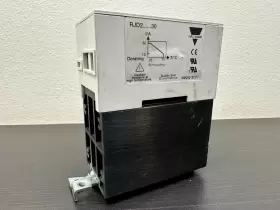
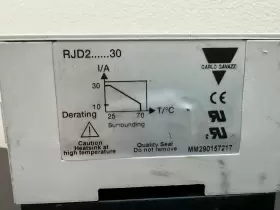
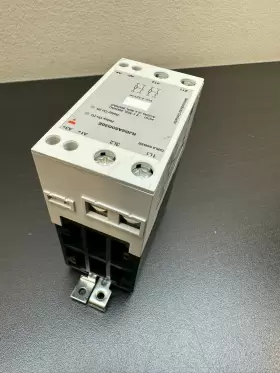
RJD2A60D30E CARLO GAVAZZI Solid Relay
| Brand | CARLO GAVAZZI |
|---|---|
| Manufacturer Part Number | RJD2A60D30E |
| Type | RELAY |
Review CARLO GAVAZZI Solid-state Relay 600v 30a Us Seller
The Carlo Gavazzi RJD2A60D30E is a solid-state relay that offers a reliable and efficient solution for controlling electrical loads up to 600 Volts and 30 Amperes. This device is designed to replace traditional mechanical relays, providing superior performance and longevity.
The RJD2A60D30E is a 3-terminal solid-state relay, featuring a normally open (NO) contact configuration. It is equipped with an opto-isolated input for safe and reliable operation, ensuring no direct electrical connection between the control and load circuits. This feature is particularly useful in applications where galvanic isolation is required, such as in control systems with sensitive electronic components or in environments with high levels of electrical noise.
The relay features a high-speed switching capability, capable of switching the load on and off within a few microseconds. This rapid response time allows for precise control of the electrical load, reducing power consumption and improving overall system efficiency. The RJD2A60D30E also features a built-in diode for reverse current protection, further enhancing its reliability and longevity.
The RJD2A60D30E is constructed using high-quality components, ensuring excellent thermal management and longevity. It is rated for a maximum operating temperature of 105 degrees Celsius, making it suitable for use in a wide range of environments. The relay is also designed for easy mounting, with a compact and rugged design that allows for easy installation in a variety of applications.
In conclusion, the Carlo Gavazzi RJD2A60D30E is a high-performance solid-state relay that offers superior reliability, efficiency, and safety. Its opto-isolated input, high-speed switching capability, and built-in diode make it an excellent choice for applications requiring galvanic isolation and precise control of electrical loads. Its rugged construction and compact design make it easy to install in a variety of environments, making it a versatile and reliable solution for controlling electrical loads up to 600 Volts and 30 Amperes.
Pros of buying Carlo Gavazzi RJD2A60D30E Solid-State Relay (600V, 30A):1. High Voltage Capability: With a voltage rating of 600V, this relay can handle high voltage applications, making it suitable for industrial environments.
2. High Current Capacity: The 30A current rating allows it to handle a significant amount of electrical current, making it suitable for high load applications.
3. Reliability: Solid-state relays are known for their reliability, as they have no moving parts that can wear out over time.
4. Fast Switching Time: Solid-state relays can switch on and off much faster than mechanical relays, which can be beneficial in certain applications.
5. Compact Size: The Carlo Gavazzi RJD2A60D30E is a compact device, making it easy to install in a variety of locations.
Cons of buying Carlo Gavazzi RJD2A60D30E Solid-State Relay (600V, 30A):1. Cost: Solid-state relays, especially ones with high voltage and current ratings, can be more expensive than their mechanical counterparts.
2. Limited Operating Temperature Range: While the Carlo Gavazzi RJD2A60D30E has a wide operating temperature range of -40 C to 125 C, extreme temperatures can still affect its performance.
3. Requires Specific Control Circuit: Solid-state relays require a specific control circuit, which can add to the overall cost and complexity of the system.
Conclusion:The Carlo Gavazzi RJD2A60D30E Solid-State Relay is a reliable, high voltage and current capable device that can handle a variety of industrial applications. However, its cost and the need for a specific control circuit are drawbacks that should be considered before making a purchase. If the application requires a reliable, high-performance relay and the cost is not a major concern, then this relay could be a suitable choice. If cost is a major concern or the application does not require such high voltage and current capabilities, then a less expensive, lower rated mechanical relay may be a more suitable option.
Details:
The stated condition is based upon our ability to evaluate the items visually unless tested.
specifications genpurrelays:
- brand: Carlo Gavazzi
- mpn: Rjd2a60d30e
- type: Relay
shipping genpurrelays:
- carrier: usps, ups, fedex
- transit: 4-8 days
- service: usps ground advantage, ups ground, usps priority mail, fedex ground or fedex home delivery
- class: standard, expedited
- type: calculated
payments genpurrelays:
- credit card: discover
- wallet: paypal
returns genpurrelays:
- paid by: buyer
- method: money back
- time: 30 days
- policy: returns accepted
seller genpurrelays:
- city: willoughby, ohio
- rating: 100.0%
- # reviews: 6498
offer genpurrelays:
- options: ship-to-home
- availability: in stock
- prices: $180.00–$350.00
- item condition:
- New
- New – Open box
- sold #: 36
- in stock #: 2
- started: may 2, 2024
general genpurrelays:
- category: Business & Industrial > Electrical Equipment Supplies > General Purpose Relays
Similar Items:
- Carlo Gavazzi Rj1a60d70ev Solid State Relay Semiconductor Contactor 600v Please refer to the photos...(January 27th, 2024)
- Carlo Gavazzi Dpb01cm48 3-phase Voltage Level Relay 380-480v 50 60hz Used Lock: 27C3-12 part #: DPB01CM48. Carlo Gavazzi 3-PHASE voltage level relay part #: DPB01CM48...(January 29th, 2024)
- Carlo Gavazzi Dpc01dm49400hzb008 3-phase Monitoring Relay Selling as-is. Used no knowledge if it is in working condition...(February 1st, 2024)
- Carlo Gavazzi 190 230 Sv190230 Sv Npn Sensing Dual Level Relay Used And Tested Mpn SUV 190 230 SV190230. Manufacturers warranty and support do not apply. Bank transfer.: SUV 190 230 SV190230 Carlo Gavazzi non sensing dual level relay used and tested. SUV 190 230 SV190230 Carlo Gavazzi non sensing dual level relay used and tested SUV tested...(February 3rd, 2024)
- Carlo Gavazzi S1420156024 Infrared Relay Part #: Carlo Gavazzi S1420156024 for sale...(February 4th, 2024)
- Carlo Gavazzi Rz3a60d55 Solid State Relay Used 140101 Holly rd, mi 48442. Expedited shipping services are available upon request. This does not include items sold as is or parts. Related ideal reference numbers: 140101. Located at: 10230 on our showroom floor. It does not include manuals or printed materials...(February 6th, 2024)
- Carlo Gavazzi Rcp8002 Zpd-8 Power Relay With Zpd8 Socket Base Mpn RCP8002 and ZPD-8. RCP8002: power relay. Manufacturers warranty and support do not apply. Relay socket base. Nickel-plated copper alloy contacts. Condition used. Screw terminals. Din rail mount. RCP8002 Carlo Gavazzi power relay with ZPD-8 ZPD8 socket base: $20.00. Non latching...(February 12th, 2024)
- Carlo Gavazzi Euac480 Eau C 480 V Controller 3-phase Eauc480 Tsc Carlo Gavazzi Esau c 480 v controller 3-PHASE EAUC480 SC jch PRE13, manufacturer: model: EULA type: 3-PHASE, used, in working condition.this item is used...(February 14th, 2024)
- Carlo Gavazzi Rj3a60d20 Lot Of 2 Semiconductor Contactor Relays Lot of 2 Carlo Gavazzi RJ3A60D20 semiconductor contractor relays, manufacture: Gavazzi, model. Condition: used/good condition, BC2438-2909E model: RJ3A60D20...(March 1st, 2024)
- Carlo Gavazzi Dwb01cm4810a Relay 3-phase Load Guard 380 480 Vac Dwb01 Part #: Carlo Gavazzi DWB01CM4810A for sale...(March 11th, 2024)
- Carlo Gavazzi Dia53s72420a Ac Current Relay 2-20a 500-400hz Shock absorbs. Flow indicators. Safety and security. Circuit breakers. Knife gate valves...(April 11th, 2024)
