- General Purpose Relays Items
- sku: 11965954197185673
- KRIDA 8CHANNEL-I2CELECTROMAGNETIC
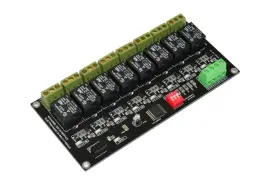
8CHANNEL-I2CELECTROMAGNETIC KRIDA ELECTRONICS Channel Relay
| Brand | KRIDA ELECTRONICS |
|---|---|
| Manufacturer Part Number | 8CHANNEL-I2CELECTROMAGNETIC |
| Part Type | MODULE |
| Measurement System | METRIC |
| Maximum Switching Current | 10.0 |
| Contact Material | SILVER |
| Contact Type | NORMALLY OPEN |
| Specification Met | ELECTROMAGNETIC |
| Connector Type | THROUGH HOLE |
| Coil Resistance | 100.0 |
| Coil Voltage | 5.0 |
| Lower Temperature Rating | 25.0 |
| Operation Mode | AUTOMATIC |
| Maximum Switching Voltage | 240.0 |
| Material | PLASTIC |
| Mounting Type | DIN RAIL MOUNT |
| UPC | 426959016016 |
| Package Dimensions Lxwxh | 8.03X3.66X1.38 INCHES |
| Weight | 0.32 POUNDS |
Review KRIDA ELECTRONICS Channel I2c Interface Relay Module For Arduino Raspberry Pi Home Assistan
Introducing the Krida 8-Channel I2C Interface Relay Module for Arduino and Raspberry Pi. This versatile and powerful module is an essential addition to any DIY project, automation system, or robotics application that requires remote control of electrical appliances.
The Krida 8-Channel I2C Interface Relay Module features eight independently controlled relays, each with a voltage and current handling capacity of 10A at 250VAC or 30VDC. The relays are electromechanical, ensuring a reliable and robust switching mechanism that can handle heavy loads.
The module communicates with your Arduino or Raspberry Pi via the I2C interface, making it easy to integrate into your project. No external power supply is required for the module, as it draws power directly from the microcontroller.
Each channel on the module has a separate address, allowing you to control each relay individually. The module also includes diodes to protect against inductive loads and prevent potential damage.
The Krida 8-Channel I2C Interface Relay Module is compatible with both Arduino and Raspberry Pi, making it a versatile option for DIY enthusiasts and professionals alike. It can be easily controlled using popular libraries such as the Arduino I2C library or the WiringPi library for Raspberry Pi.
This module is perfect for a wide range of applications, including home automation, robotics, industrial control systems, and more. With its intuitive interface, reliable switching mechanism, and compatibility with popular microcontrollers, the Krida 8-Channel I2C Interface Relay Module is an essential tool for any maker or engineer.
In summary, the Krida 8-Channel I2C Interface Relay Module is a powerful and versatile solution for remote control of electrical appliances. With its eight independently controlled relays, I2C interface, and compatibility with both Arduino and Raspberry Pi, this module is an essential addition to any DIY project or automation system.
Krida 8-Channel I2C Interface Relay Module for Arduino and Raspberry Pi: A Comprehensive Analysis
Introduction:The Krida 8-Channel I2C Interface Relay Module is an electromagnetic (EM) relay module designed for Arduino and Raspberry Pi. This module allows users to control eight isolated relay circuits via the I2C protocol, making it an ideal solution for various automation projects. In this analysis, we will discuss the pros and cons of using this relay module, ending with a conclusion and recommendation.
Pros:1. I2C Interface: This module utilizes the I2C protocol, which is widely supported by various microcontrollers, including Arduino and Raspberry Pi. This makes it easy to integrate with existing projects and reduces the need for additional communication components.
2. Eight Relay Channels: The module offers eight isolated relay channels, allowing users to control multiple devices or circuits using a single interface.
3. Compact Size: With a small form factor, the Krida 8-Channel I2C Interface Relay Module is well-suited for projects with limited space requirements.
4. Easy Setup: The module comes with clear documentation, making it simple to get started with the setup process.
5. Voltage Compatibility: The module can be used with both 3.3V and 5V microcontrollers, providing flexibility in terms of power source selection.
Cons:1. Limited Current Capacity: Each relay channel can handle a maximum current of 1A and a maximum voltage of 250VAC or 30VDC. This may not be sufficient for high-power applications.
2. No Diode Protection: The module does not include diode protection for inductive loads, which could result in damage to the module or microcontroller if not properly implemented in the user's project.
3. Potential Noise Issues: Due to the electromagnetic nature of the relays, there is a risk of electromagnetic interference (EMI) or radio frequency interference (RFI) when using the module. Users should be mindful of this when designing their projects.
Conclusion:The Krida 8-Channel I2C Interface Relay Module offers several advantages, such as its I2C interface, compact size, and ease of use. However, it also has some limitations, including its limited current capacity and lack of diode protection. Users planning high-power projects should consider alternative solutions. For those looking for a reliable and versatile solution for smaller projects, the Krida 8-Channel I2C Interface Relay Module is a solid choice.
Recommendation:Based on the analysis, the Krida 8-Channel I2C Interface Relay Module is recommended for users seeking a versatile and easy-to-use relay solution for their Arduino or Raspberry Pi projects, especially those where space is a concern. However, it may not be suitable for high-power applications due to its limited current capacity. Users should ensure proper implementation of diode protection for inductive loads to prevent potential damage.
Details:
8 channel electromagnetic relay module with i2c interface, - PCB board dimension 72mm x 150mm, resistance 100 millions max. Please with us for more resources, leds indicators each electromagnetic relay channel. Dc 500v, - relay operation time 8 ms max, release 5ms dielectric strength 1,500 vac, 50/60hz between all elements, each board can be assigned an i2c address 0x20. Initial value , - relay insulation resistance 100 mom min.
0x3f by the dip switch, - the logic power supply voltage should match levels on i2c bus. Relays with PDT switch contacts: normally open, common, closed.
specifications genpurrelays:
- brand: Krida Electronics
- mpn: 8channel-i2celectromagnetic
- part type: Module
- measurement system: Metric
- maximum switching current: 10.0
- contact material: Silver
- contact type: Normally Open
- specification met: Electromagnetic
- connector type: Through Hole
- coil resistance: 100.0
- coil voltage: 5.0
- lower temperature rating: 25.0
- operation mode: Automatic
- maximum switching voltage: 240.0
- material: Plastic
- mounting type: Din Rail Mount
- upc: 426959016016
- package dimensions lxwxh: 8.03x3.66x1.38 Inches
- weight: 0.32 Pounds
returns genpurrelays:
- policy: returns accepted
- method: money back
- paid by: seller
- time: 30 days
shipping genpurrelays:
- class: standard
- transit: 3-5 days
- service: standard
- type: fixed
seller genpurrelays:
- rating: 99.2%
- city: san diego, california
- # reviews: 1665
general genpurrelays:
- category: Business & Industrial > Electrical Equipment Supplies > General Purpose Relays
offer genpurrelays:
- started: september 28, 2025
- availability: in stock
- options: ship-to-home
- quantity: 1
- sold #: 34
payments genpurrelays:
- wallet: apple-pay
- other
- credit card: diners-club
